JDM vs. Euro vs. Muscle: the three big tuning styles explained
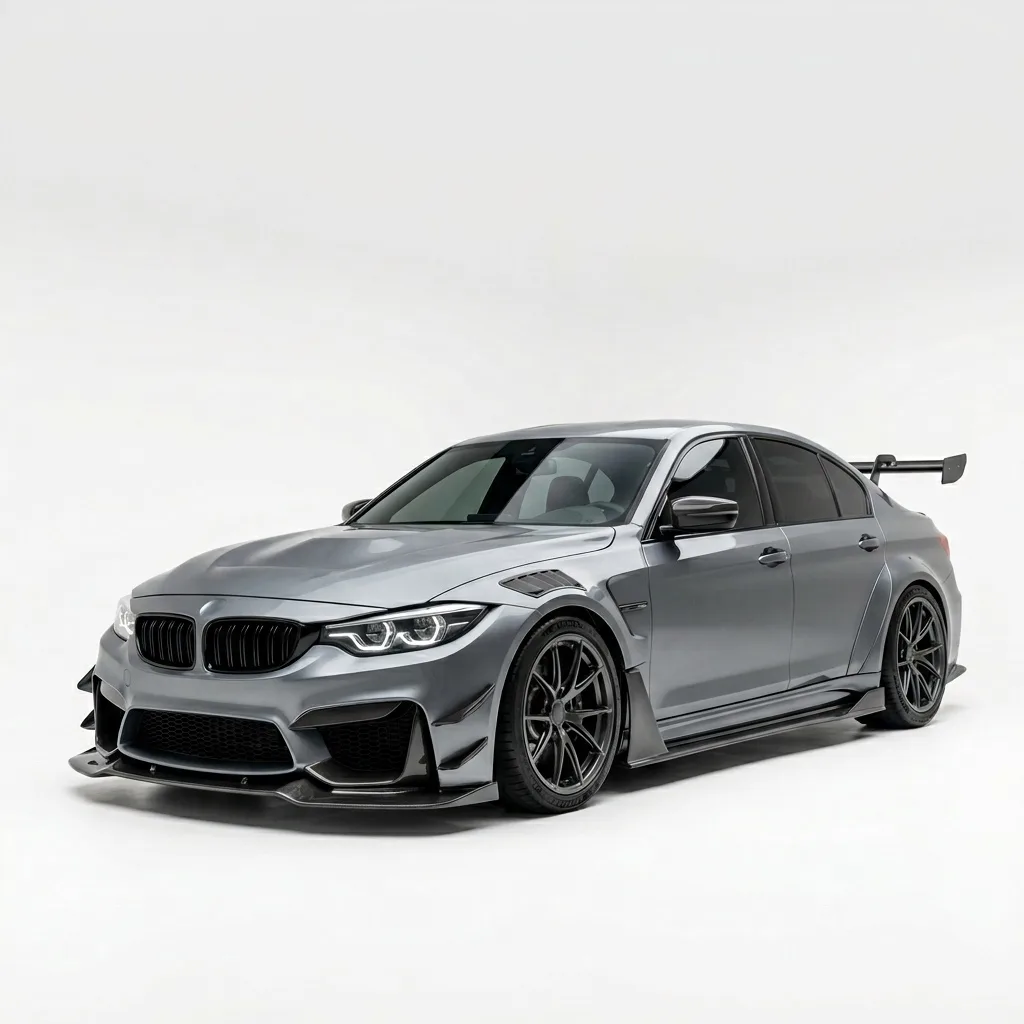
JDM, Euro and Muscle are the three tuning styles most builds get sorted into, and they're easiest to understand as three different answers to the same question: what is a modified car for? JDM says balance and function, drawn from Japan's tuner and touring-car scene. Euro says restraint and precision, drawn from German and wider European performance culture. Muscle says power and presence, drawn from America's V8 heritage. Each has its own signature wheels, stance, aero and color palette — and each can be previewed on a photo of your own car before you commit to a direction.
JDM: function-first, clean fitment
The JDM look grew out of Japanese street and track culture and its icons — the Skyline GT-R, Supra, RX-7, Civic and Evo. The visual language is purposeful: lightweight multi-spoke or mesh wheels tucked neatly into the arches, a modest drop, a front lip, a ducktail or a functional GT wing, and frequent nods to tuner brands and race liveries. Colors range from factory classics like championship white and bayside blue to bold liveries on the track-inspired end. The unifying idea is that every part looks like it earns its place, even when the reason is style. Read the deeper dive in JDM style explained or preview it on the JDM style page.
Euro: understated, precise, OEM-plus
Euro style takes its cues from German tuners and European touring-car racing — think the aesthetic around BMW M cars, Audi RS models, Mercedes-AMG and Volkswagen GTI culture. The rule is restraint: a car should look like a higher-spec version of itself rather than a different car. That means a subtle drop on quality suspension, wheels with clean, often multi-spoke or turbine designs in silver, gunmetal or gloss black, tasteful aero pieces that echo factory motorsport parts, and colors that lean toward greys, deep blues, whites and blacks. Fitment is flush and tidy; big wings and loud graphics are rare. On the more aggressive end, DTM-style aero and wider arches keep the same precision but add attitude.
Muscle: power, stance and stripes
American muscle comes from the 1960s and '70s horsepower era — Mustang, Camaro, Challenger, Charger — and its modern descendants. The look follows the mission of straight-line speed: a long hood and a broad, planted stance, wide rear wheels and tires, hood scoops, and confident paint finished with racing stripes. Wheels are typically five-spoke, classic Torq-Thrust-style or deep-dish designs in polished, chrome or satin black. Colors are bold and saturated — reds, oranges, blues, plus black with contrasting stripes. Modern restomod builds pair the classic silhouette with big brakes and contemporary wheels. The muscle car style page shows how it reads on a current car.
The same mods, three different ways
- Wheels: JDM — lightweight mesh or multi-spoke, bronze and gunmetal; Euro — clean multi-spoke or turbine, silver and black; Muscle — five-spoke, Torq-Thrust and deep-dish, polished or chrome.
- Stance: JDM — modest drop, tucked fitment; Euro — subtle drop, flush fitment; Muscle — level or slightly raked, with the width at the rear.
- Aero: JDM — front lip, canards, ducktail or GT wing; Euro — factory-style splitters and diffusers, discreet spoilers; Muscle — hood scoops, chin spoilers, rear decklid spoilers.
- Color: JDM — heritage colors and liveries; Euro — greys, deep blues, monochrome; Muscle — saturated colors with racing stripes.
- Attitude: JDM — track-bred function; Euro — OEM-plus precision; Muscle — presence and power.
Which style suits your car?
Start from what the car already is. Japanese hatchbacks, coupes and sedans wear JDM naturally; German and European models look right in Euro; V8 coupes and sedans are muscle by birth. But the cues cross over more than purists admit. A Euro-style treatment can make almost any modern sedan look expensive; JDM fitment and a lip spoiler work on most compact hatchbacks; and stripes with wide rear wheels give plenty of rear-drive coupes a muscle attitude. The fastest way to find out is to try each on a photo of your own car rather than argue about it.
Preview all three in minutes
In Car AI's Style Builder, upload a clear three-quarter photo of your car and apply the JDM, track-day or muscle car style to see complete build directions, or build a Euro look piece by piece: a subtle drop, clean silver or black wheels, a factory-style body kit and a grey or deep-blue paint color. Compare the results side by side, pick the direction that makes the car look most like itself, and take that image to your shop as the brief. The preview is a styling reference rather than a parts list — but as a way to choose a direction before spending anything, it beats imagination every time.
Frequently asked questions
What is the difference between JDM and Euro tuning?
JDM style comes from Japanese tuner culture and favors lightweight wheels, tucked fitment, functional aero and liveries; Euro style comes from German and European performance culture and favors restraint — a subtle drop, clean wheels, factory-style aero and monochrome colors. JDM reads track-bred; Euro reads OEM-plus.
Can a non-American car have a muscle look?
As a styling direction, yes. Wide rear wheels, a planted stance, bold paint and racing stripes give many rear-drive coupes and sedans a muscle attitude. Car AI can preview muscle-inspired cues on a photo of any car.
Which tuning style holds value best?
Generally the more restrained and reversible the build, the easier it is to sell. Euro-style OEM-plus builds and clean JDM fitment tend to appeal to more buyers than heavily cut or loudly liveried cars, and wheels and wraps are easier to undo than body modifications.